
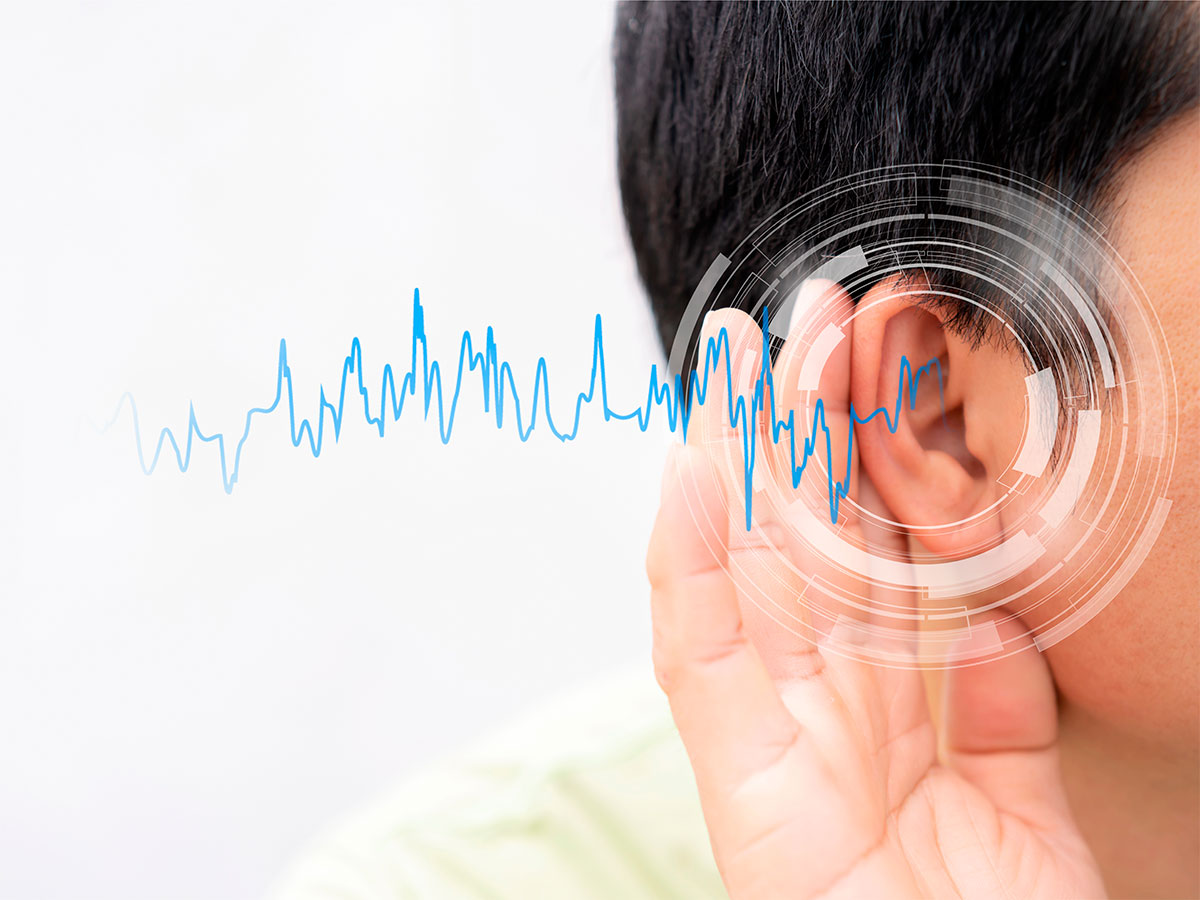
Over the last few decades, the world around us has grown considerably louder. What used to be occasional exposure to high sound levels has slowly become a constant reality. From home to office spaces, our environments now expose us to prolonged and repeated noise. Even personal habits, like spending long hours wearing headphones, add to the stress on one’s ears.
According to the World Health Organization (WHO), nearly 2.5 billion people worldwide are expected to experience some degree of hearing loss by 2050. Importantly, this is not limited to older populations. Increased exposure to noise, urban lifestyles, and prolonged use of personal audio devices have made hearing loss a cross-generational issue. In these situations, hearing aids are not always sufficient and there lies a better and evolved solution. Let’s explore that further.
Why Hearing Aids Alone Aren’t Enough?
Imagine sitting in a busy restaurant with people talking over each other, and the sound of clattering dishes and music all blend into one. Despite wearing hearing aids, people with hearing loss find themselves struggling to keep up in such situations. They may nod along without fully understanding and even withdraw from conversations altogether. The emotional toll is significant as feelings of isolation and frustration become all too common. To address these challenges effectively, hearing aids require additional support.
Hearing aids by themselves are powerful devices that significantly improve everyday communication. However, in complex acoustic environments, their ability to distinguish speech from background noise can be limited. They amplify much of the surrounding sound along with the speaker’s voice.
How Assistive Listening Systems Enhance Speech Clarity?
At the core of every meaningful listening experience lies one crucial factor, and that is the Signal-to-Noise Ratio (SNR). This is the balance between the sound you want to hear and the sounds you don’t. For someone with a hearing loss, this balance becomes especially delicate.
Simply increasing overall volume does not solve the problem because it raises the level of background noise along with the speech signal. What truly matters is improving the clarity of speech relative to everything else competing for attention.
With assistive listening systems, instead of relying on sound that travels through open air, these systems deliver audio directly from the source to the listener’s hearing device. Audio becomes sharper, clearer, and overall much easier to understand.
Globally, three technologies form the backbone of assistive listening systems. They are:
- Hearing Loops, which use magnetic induction to send sound straight into the hearing device equipped with a T-coil, offering a seamless hands-free experience.
- FM Systems, which transmit sound via radio waves to a personal receiver.
- Infrared (IR) Systems, which use light-based signals to carry audio within line-of-sight areas.
Each method works towards the same goal, but they vary in terms of reliability, convenience, and the overall user experience that they provide.
Why The Hearing Loop Is The Ideal Solution?
While FM and IR systems are widely used assistive listening technologies, they come with inherent limitations. FM systems require receivers, which can make them inconvenient or stigmatizing, and they are not suitable for confidential environments. IR systems require line of sight to the transmitter and are limited by lighting conditions.
Univox hearing loops transform the listening experience entirely. Once installed in a venue, all the user has to do is switch their hearing aid to the T-coil setting.
Some features of the Univox Hearing Loops are:
- High speech clarity.
- Superior metal loss compensation.
- Compliance with international standards.
- Advanced loop drivers.
Hearing loops offer a seamless experience for users, allowing them to connect instantly without the need for additional devices or visible equipment. This discreet, effortless access to clear sound significantly improves speech understanding in noisy environments, helping people with hearing loss feel more engaged, confident, and included in everyday interactions. At the same time, hearing loops benefit organisations and public spaces by creating environments that are genuinely accessible and welcoming to all. They enhance visitor satisfaction, align with global accessibility standards, and are supported by hearing aid manufacturers worldwide. Beyond the listening experience, hearing loops are also a smart long-term solution, making them one of the most efficient and sustainable accessibility investments available.
Hearing accessibility is not just a technological upgrade; it is a human right. Assistive listening systems ensure that people with hearing loss are included, informed, and empowered in every part of public life. With Univox’s advanced hearing loop solutions, venues can offer world-class accessibility, and individuals can experience sound the way it was meant to be heard.